Museum InFocus #5 explores communication in Siam, from telegraph to Wireless House, as structures of power, memory, and the contemporary city.
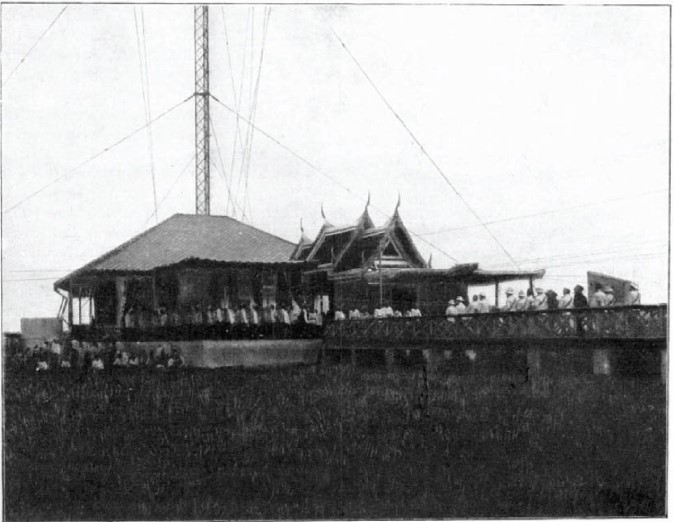
Original source : Kaosayanon, K. (2026, March 21). Excavation of the Sala Daeng radiotelegraph station and reinterpretation [Talk]. Museum in Focus #5, Museum Siam and One Bangkok. (Citing curatorial research from One Bangkok)
Telegraph, Radio, Television, and New Storytelling at Wireless House
Research & Article
This article is based on Museum InFocus #5, held on Saturday, 21 March 2026 at Museum Siam. It explores the history of communication in Siam, from the telegraph to radio and television, as a structure of power that shaped the state, the nation, and everyday life. It brings together academic perspectives and archaeological evidence. The discussion covers telegraph networks, broadcasting systems, and the shift to visual media. It also looks at the excavation of the Sala Daeng radiotelegraph station and its reinterpretation as “Wireless House” in a contemporary urban context. The article shows that communication is not only a tool, but a lasting structure that continues to shape society today.Compiler : Chewasit Boonyakiet
Cultural Modernisation, Infrastructure Development, Urban Governance, Western Influence in Siam
In a time when communication feels fast and without borders, it is useful to look back at its foundations. The telegraph, radio, and television were not only tools for sending messages. They also played an important role in shaping state power. These technologies helped organise authority, create ideas of the nation, and define relationships between the centre and people across Thai society. Museum in Focus #5 invites us to see communication as a history of power, memory, and everyday life. These forces still influence the present.
Under the theme “Telegraph, Radio, Television, and New Storytelling at Wireless House”, the event brings together scholars and practitioners from different fields. The discussion is organised into three main parts. The first looks at telegraph networks and the centralisation of state power. The second explores radio and television as tools for creating shared meaning in society. The third examines how the past is interpreted through urban archaeology and contemporary exhibitions at Wireless House. Each speaker offers a different view of “communication”. Together, these perspectives show how communication works as a structured system within the state and the city.
1. Telegraph: The Network of State Power in Siam
In the view of Dr Wiphat Lertsattanarungsi, the telegraph was not only a communication technology. It was a key infrastructure that deeply changed the meaning of the Siamese state in the late nineteenth and early twentieth centuries. In public memory, the railway often stands as a symbol of modernity. In reality, the telegraph spread faster, reached further, and had a more direct impact on the state’s ability to give orders. The quiet wires acted like an invisible weapon. For the first time, the state could communicate with distant areas without relying on messengers.
The rise of the telegraph in Siam must be understood within a global context. When telegraph networks connected Europe and Asia, Siam did not simply adopt new technology. It entered the “language” of the modern state. King Rama V recognised its potential early in his reign. He supported the rapid expansion of telegraph lines, both within the country and across borders. Within a few decades, the network reached major regional centres. This shows how much the state valued the ability to monitor and control space, as well as to support communication among its people.
In Dr Wiphat’s view, the telegraph did more than introduce a new way to communicate. It shortened time at a structural level. The old “bai bok” system relied on many workers and took a long time. A message from Ayutthaya to Nong Khai could take up to 120 days. With Morse code, communication became much faster. Information could travel in a fraction of the time. State officials could receive news close to the moment when events happened. The telegraph also reduced the limits of geography, which had long been a major barrier to governance.
At the same time, the telegraph connected Siam to the modern world in a concrete way. Global networks linked Europe and Asia in the 1870s. Siam then moved quickly to develop its own system, both domestic and international. In 33 years, more than 7,500 kilometres of telegraph lines were built. In the same period, railway lines covered only 931 kilometres. This comparison shows clearly that, for the Siamese state, communication was an urgent priority. It was a tool for surveillance, control, and command over officials across the system. Here is your passage in **clear British English**, with simple sentences, limited clauses, and a smooth flow:
2. From Sound to Image — Media Structures that Shaped the “Nation”
Kannika Cheevapakdee’s talk invites the audience to look at the development of Thai broadcasting. She uses a framework that connects people, technology, and the state in a clear way. Radio and television were not only tools for communication. They were key infrastructures that helped shape the idea of the nation in the modern period.
Prince Kamphaeng Phet Akkharayothin played an important role in this process. He helped lay the foundation for radio broadcasting alongside the railway system. He saw the potential of radio waves to connect people. Radio signals worked as a “wireless network” that linked the centre with regions across long distances.
Kannika highlights the Phaya Thai radio station as an early starting point. It shows a major shift from experimental technology to mass communication. At first, the focus was on testing transmitters and frequencies. Later, the station began to produce radio programmes, including news, music, and entertainment. This change made radio more than a state channel. It became a medium that connected with people in their homes.
The role of the state became clearer after the political change in 1932. Radio services moved to the Public Relations Department. Radio then became a key tool in defining “Thainess” through state policies. Broadcasting did not only share information. It also shaped behaviour and culture based on official views. At the same time, regional radio programmes showed a range of local voices and content. These can be seen as voices from the regions.
The arrival of television in the mid-twentieth century marked another important shift. Communication moved from sound to image. This added an emotional dimension to how messages were received. Television changed not only how people received information, but also how they shared experiences. People gathered to watch together in communities. National programmes reached audiences across the country at the same time.
From a technological point of view, television made broadcasting systems more complex. It required both sound and image to work together. Early Thai television, especially during the period of Channel 4 Bang Khun Phrom, was still limited. Broadcasts were in black and white. Signal range was narrow. Television sets were expensive and not widely available. For these reasons, television was both an innovation and a symbol of modernity.
At the same time, network development became an important challenge. This included main stations, regional stations, and repeater stations. These systems required engineering knowledge, technology, and state support. Radio and television helped signals travel beyond geographic limits. They also brought images of modern life into rural areas. This changed the media landscape and shaped how people understood the world. It also influenced patterns of movement and social change over the long term.
One of the most important changes brought by the telegraph was the concept of time in governance. The bai bok system took days or even months. Morse code reduced distance to hours or days. This helped centralise power in Bangkok in a way that had not been possible before. Dr Wiphat gives key examples. In the Phaya Prap Songkhram rebellion in 1889 in Chiang Mai, the central state could receive information and coordinate forces in time. During the Franco-Siamese crisis of 1893, when French warships entered the Chao Phraya River, the telegraph reported events from the conflict area to Bangkok and allowed a rapid response.
3. Excavating the Sala Daeng Radiotelegraph Station
If the earlier sections describe technologies that are still in use, this part moves in a different direction. It looks at physical evidence of early communication systems. The remains of the Sala Daeng radiotelegraph station can be seen as an “underground structure” of modernity. Archaeology at this site helps us understand the whole wireless system that once connected Siam to the wider world.
The site now lies beneath what is today part of the One Bangkok development on Wireless Road. It was the location of the first radiotelegraph station in Siam. The station opened on 13 January 1913 during the reign of King Rama VI. On that day, the King sent a message to a receiving station. This act marked Siam’s entry into a modern communication network. More than a century later, Kasama Kaosayanon and a team of archaeologists returned to excavate the site between 2017 and 2018.
The study began with archival research. Construction plans for a “2.5 KW Radiotelegraph Station in Bangkok” and land maps from before 1913 guided the work. These documents helped the team understand what had been designed and what might remain underground. The excavation showed a strong match with the original plans. The brick foundations, the size and layout of the building, and the internal spaces were all consistent. These included the engine room, the battery room, and areas for machinery. Wooden piles made from hardwood were used to support the structure in Bangkok’s soft soil. This shows how engineering knowledge was adapted to local conditions.
If the building was the control centre, the signal towers and anchoring system were the core of transmission. The team found the base of a tower about 60 metres high. They also uncovered large underground anchor structures. These supported the tension of steel cables in all weather conditions. The design reflects careful calculation and advanced engineering knowledge. It also shows how technology was transferred from abroad in the early twentieth century.
Among the most important finds were glass insulators. These were used to control the flow of electricity from the antenna. They prevented current from leaking into metal structures or the ground. This was essential for long-wave radio transmission. When studied together with the complex grounding system, these objects show that the Sala Daeng station used technology at a level similar to stations in Europe and America. They also show that Siam adopted new technology in a serious and systematic way.
The excavation also revealed everyday objects. These included Chinese and Japanese ceramics, European tableware, glass bottles, and animal bones. These finds show daily life at the station and later uses of the site. After the station closed, the area became a military preparatory school and later the Suan Lum Night Bazaar. The range of objects reflects different periods of use. This excavation shows how the Sala Daeng area has changed over time. It began as farmland on the edge of the city in the early reign of King Rama VI. It then became a key technological site. Later, it turned into a military institution. Today, it is part of major urban development.
4. From Past Structures to Meaningful Spaces in the Contemporary City
The restoration of the Sala Daeng radiotelegraph station as “Wireless House” is part of the One Bangkok project. Jarintip Choomuenwai, Chief Curator and Senior Vice President for Art and Culture, explains that the project builds a bridge between past and present. It brings old communication technology and infrastructure back into meaning within a contemporary urban context.
The main idea is to preserve the “roots” of the area along Wireless Road. This approach leads to the concept of “Living Forward”. It aims to connect the past with the future through architecture and urban design. Wireless House is not a replica. It is a new representation of the Sala Daeng station within today’s city. The design is based on historical documents and archaeological evidence.
The restoration process requires close collaboration. Conservation architects, historians, and archaeological data all play a role. The goal is to match the original building as closely as possible in scale, form, and architectural detail. At the same time, the placement of the building within the new development is important. The original landscape has changed greatly over time. Wireless House today stands within a large real estate project. It combines urban development with cultural space. It brings together history and artistic creation.
Inside the building, the exhibition goes beyond a traditional museum display. It transforms knowledge from archaeology into experiences that are easy to understand. Elements such as foundations, glass insulators, and traces of past users are presented in engaging ways. The space includes a permanent exhibition on communication history. It also offers semi-cultural and lifestyle areas. These include seating spaces, music, and activities that encourage social interaction.
At a wider level, the revival of the Sala Daeng station adds new meaning to the contemporary city. It reconnects the name “Wireless Road” with its real history. What was once only a name on a map becomes a place that people can experience. The link with public art and open space also shows the role of culture in improving urban life. In the end, Wireless House is more than a restored building. It is a way to carry memory, knowledge, and inspiration from the past into the present.
Source
National Discovery Museum Institute. (2026). Museum in Focus #5: Telegraph, Radio, Television, and New Storytelling at Wireless House (Talk and site visit, 21 March 2026, Museum Siam and Wireless House, One Bangkok).
This public programme explored the history of communication in Siam as a structure of power, combining academic talks with a site visit. Speakers included:
- Dr Wiphat Lertsattanarungsi, independent scholar specialising in the history of technology and state formation
- Kannika Cheevapakdee, former director at the Public Relations Department Museum and Archives, expert in broadcasting media
- Kasama Kaosayanon, archaeologist with expertise in excavation and heritage conservation
- Jarintip Choomuenwai, Chief Curator and Senior Vice President for Art and Culture, One Bangkok
-
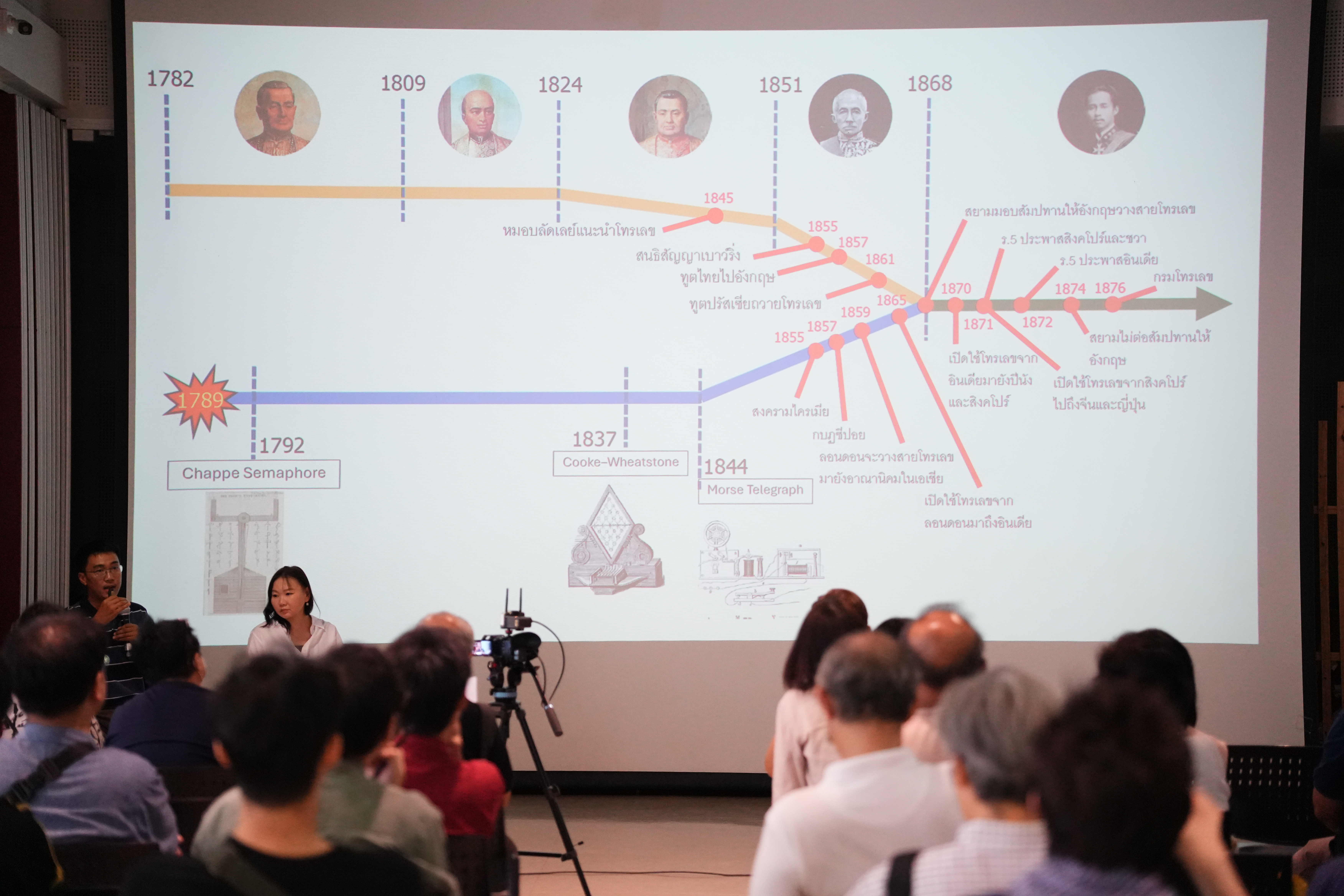
From Global Telegraph to Siam
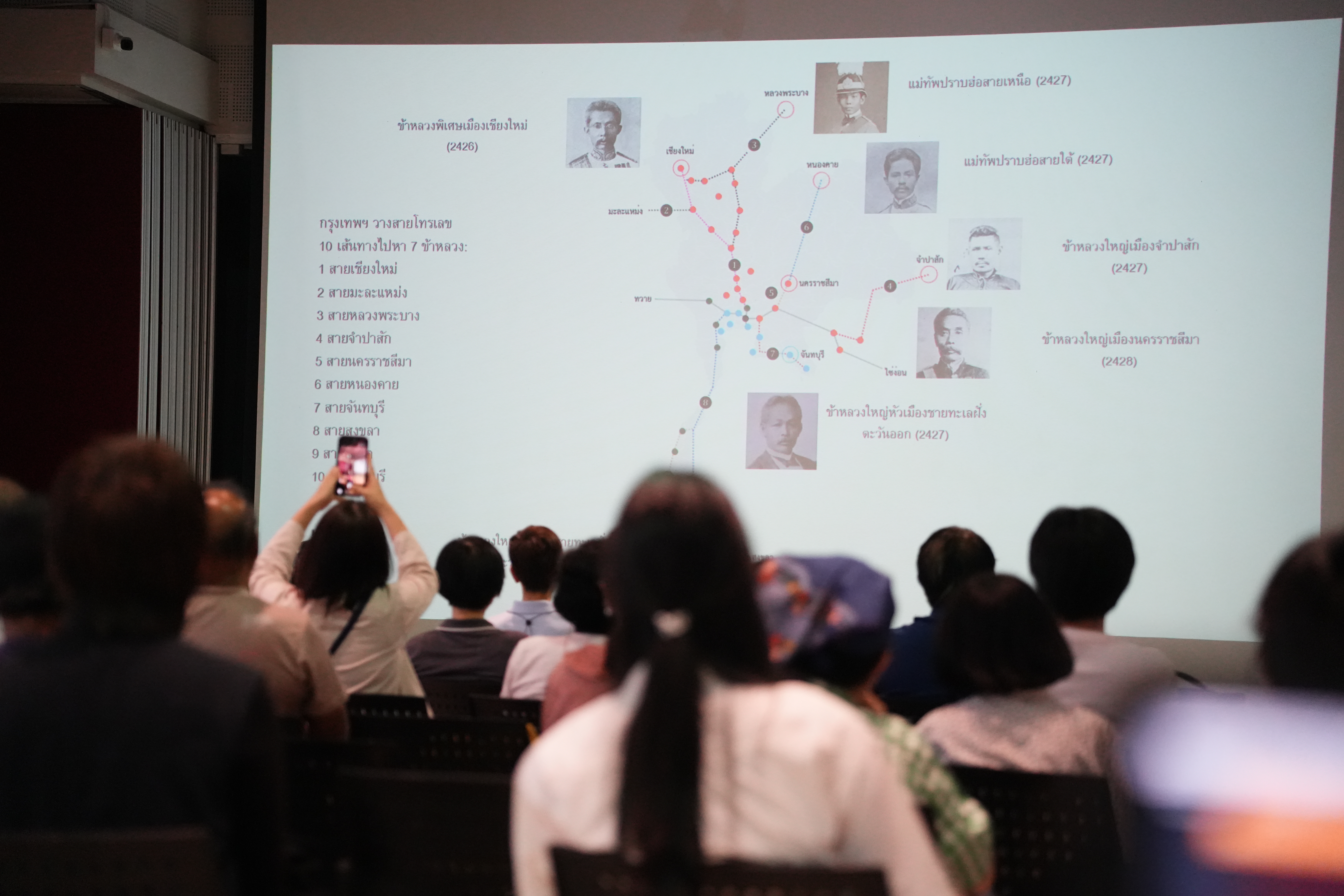
Telegraph and Governance in Siam
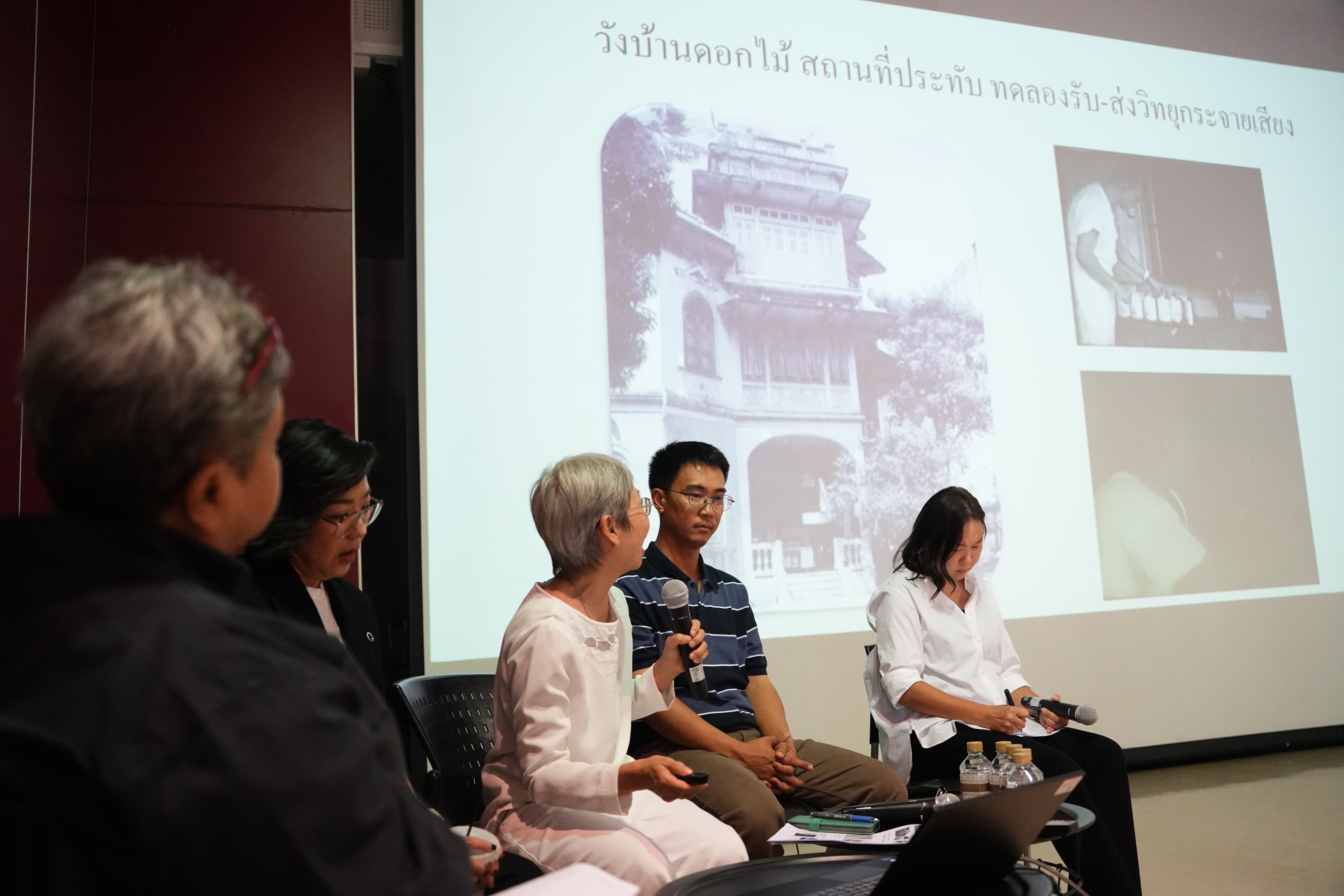
The Birth of Broadcasting in Siam
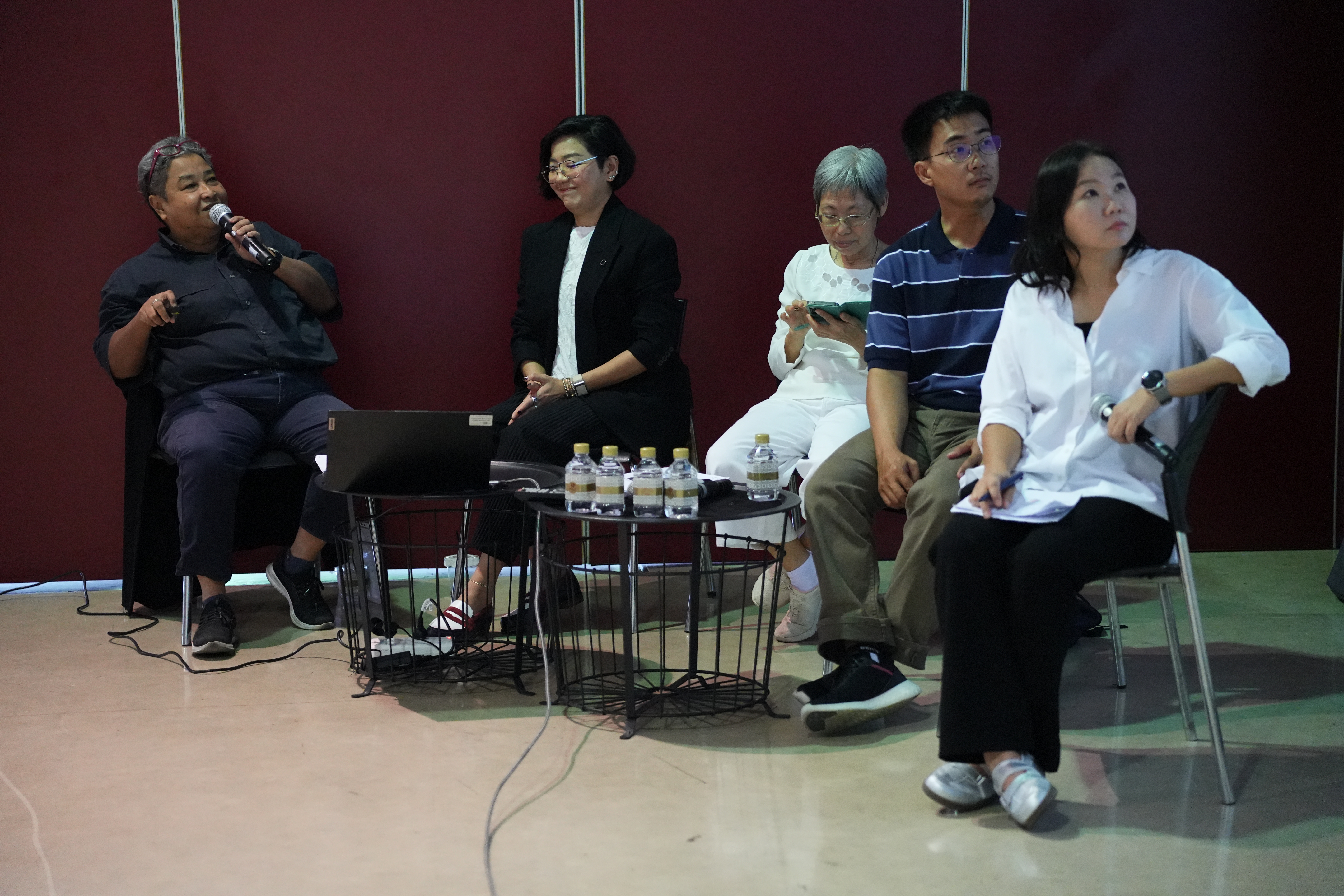
Speakers of Museum InFocus 5
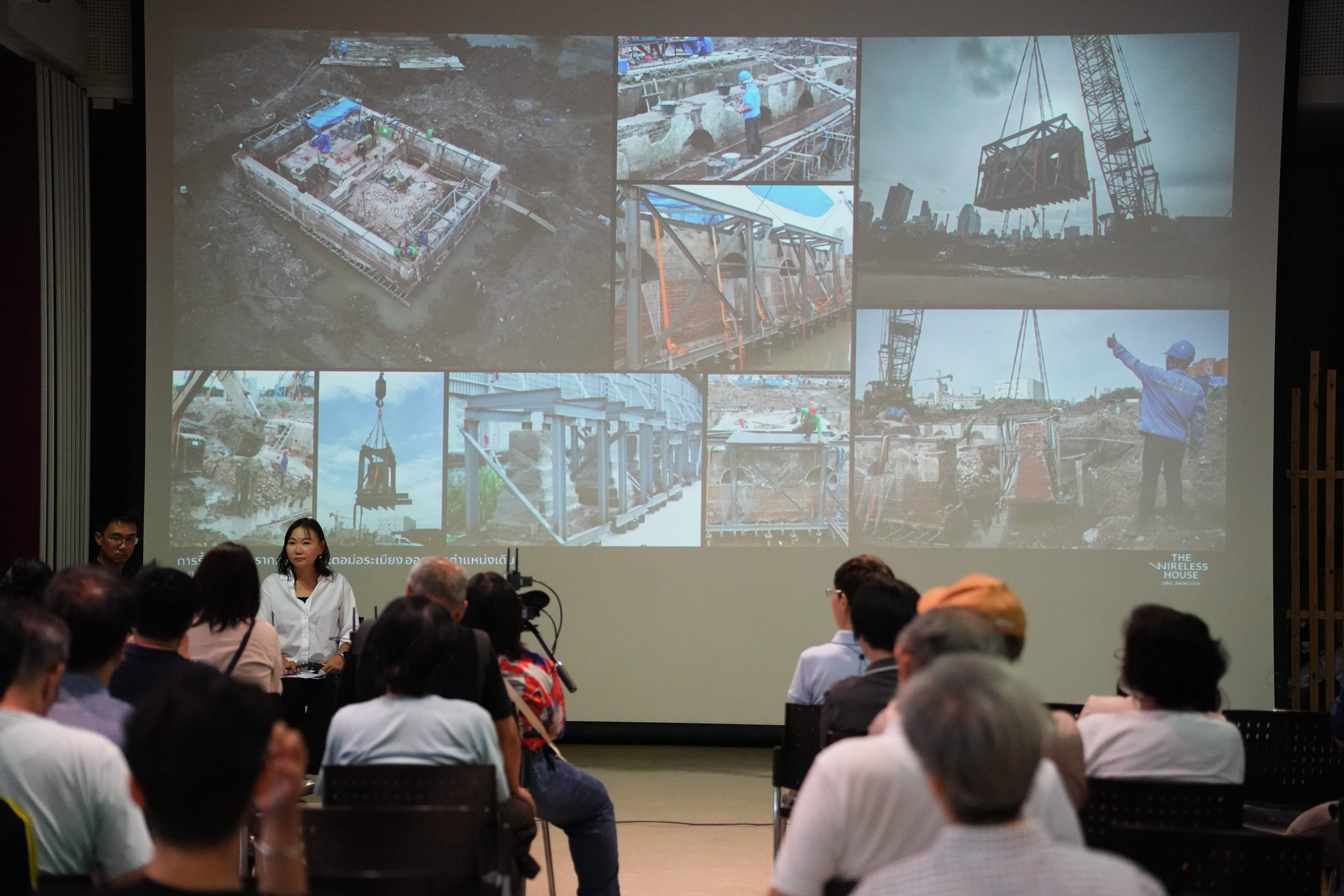
Archaeology of Sala Daeng Radio Station
- National Discovery Museum Institute
4 Sanam Chai Rd., Phra Nakhon, Bangkok 1200 THAILAND
- Opening hours: at 10.00 a.m.- 6.00 p.m. Tuesday-Sunday (closed on Mondays)
- Tel. : 02 225 2777
- Fax. : 02 225 2775


