This video is a recorded session from Museum in Focus #4, “The Moving City: Mobility and Rail Systems in Bangkok,” exploring how rail transport has shaped the city’s urban form, economy, and everyday life.
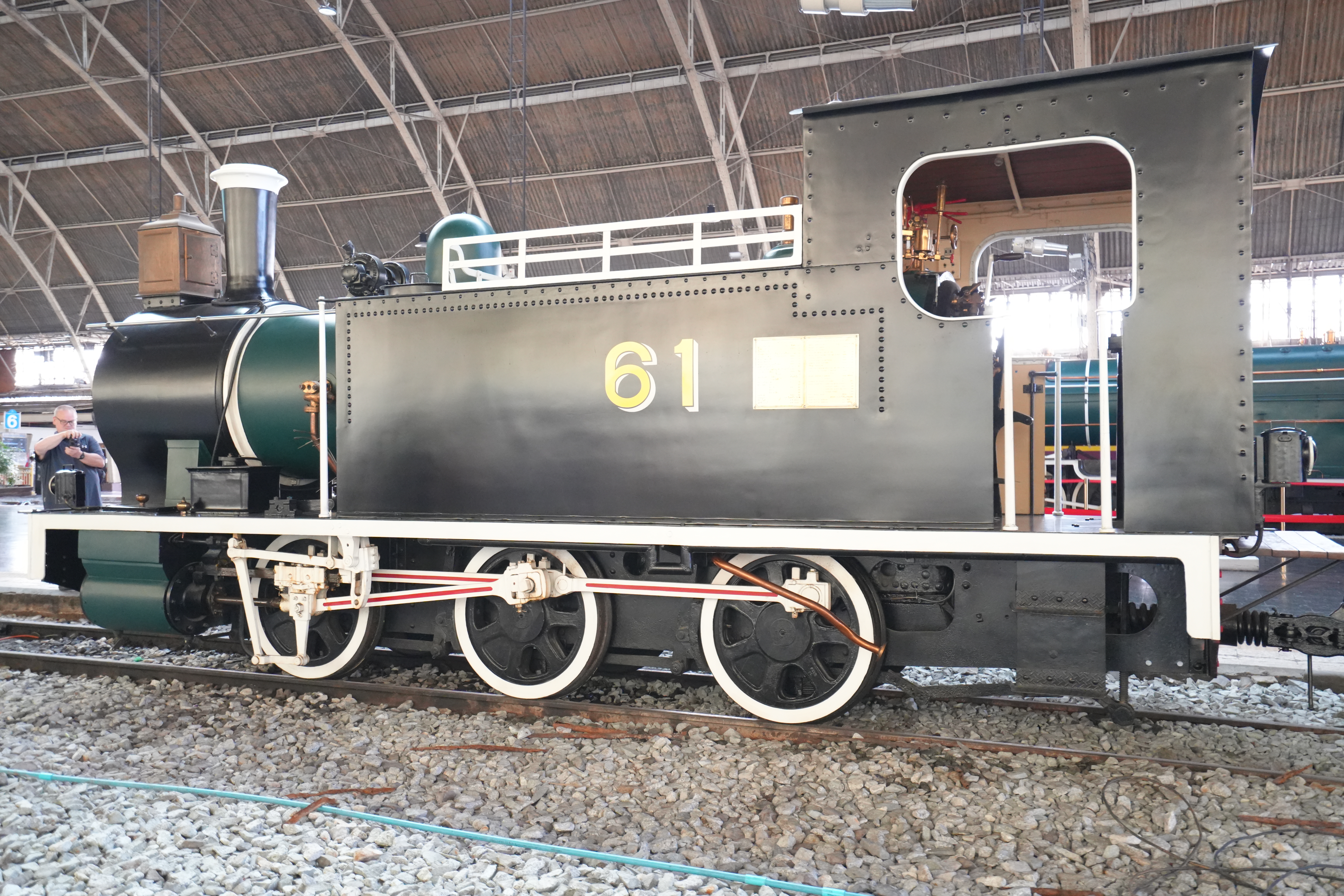
Bangkok in Motion: How Rails Shape the City
Research & Article
This article, based on the Museum in Focus event “Bangkok in Motion: How Rails Shape the City”, examines the role of rail transport in shaping Bangkok from the late nineteenth century to the present. It argues that tramways, mainline railways and contemporary electric mass transit are not merely transport systems, but fundamental infrastructures that have structured the city’s economic networks, spatial organisation and collective memory. The study traces the introduction of trams under King Chulalongkorn (Rama V), the expansion of national railways as instruments of economic integration and state consolidation, the post-war shift towards road-based urban development and the eventual decline of tram services, and the revival of rail in electric form from 1999 onwards. The latter has stimulated transit-oriented development and reconfigured land use patterns across the metropolis. The article further explores the historical evolution of the Hua Lamphong area, distinguishing the early suburban terminus from the later Bangkok Railway Station, and analysing its architectural form, symbolic meaning and impact on surrounding communities. Taken together, the discussion demonstrates that rail infrastructure has been a central force in the making of modern Bangkok—a city continually shaped, materially and socially, by its tracks.Compiler : Chewasit Boonyakiet
Engineering & Technology, Public Transport History, Transportation Infrastructure, Rattanakosin Era, King Chulalongkorn
Understanding Bangkok as a “city in motion” goes beyond traffic congestion or the recent expansion of electric train lines. It points to the long historical process through which transport infrastructure, especially the railway, has shaped and reshaped the city since the late nineteenth century.
The fourth Museum in Focus event, “Bangkok in Motion: How Rails Shape the City”, was held on Saturday 28 February 2026 at Museum Siam by the National Discovery Museum Institute. Designed as a Talk & Walk programme, it combined a public lecture with a site visit to Hua Lamphong Railway Station. The event invited participants to explore how rail systems connect infrastructure, urban space, and everyday life.
During the discussion, Professor Ichiro Kakizaki traced the development of Thailand’s railways, from early tramways and main lines to modern mass transit. Khun Wanvis Niampan focused on the history of Bangkok Railway Station—better known as Hua Lamphong—highlighting its architecture, nearby communities, and travel culture. The session was moderated by Khun Saran Thongpan, who linked large-scale infrastructure with personal and social experience.
Based primarily on the event transcript and the official programme, this article shows that railways are more than a mode of transport. For over a century, they have shaped Bangkok’s economic networks, influenced patterns of settlement, and formed shared memories. Rail infrastructure has been a central force in the making of the modern Thai capital—a city that continues to move and change.
The Beginnings of Rail in Siam
Rail transport in Siam began in the late nineteenth century, during a period of reform and state modernisation. At that time, Bangkok was expanding in population, trade, and international connections. The introduction of tramways was not simply about improving travel. It formed part of a broader effort to modernise the capital under the reign of Chulalongkorn (Rama V).
Bangkok’s first tramline opened in the late 1880s. In its early years, trams were horse-drawn before later being converted to electric power. The shift to electricity marked an important technological step. Around the same period, other major Asian cities were also introducing electric tram systems. In Siam, electric trams were not only an engineering achievement but also a visible sign of progress and civilisation in the eyes of the international community.
In organisational terms, the early tram system was largely operated by foreign private companies. One key example was the Siam Electricity Company, backed by Danish and Dutch investors, which generated electricity while also running tram services. In 1897, a Thai-owned enterprise—the “Thai Tramway Company”—was established under the leadership of Prince Narathip Praphanphong. It operated three routes in Bangkok: Hua Lamphong, the City Loop, and Dusit. However, the Thai company faced operational difficulties and was eventually absorbed by the foreign-controlled firm.
During the early twentieth century, the tram network continued to expand. At its peak under the reigns of Rama VI and VII, the system covered around 50 kilometres and carried hundreds of thousands of passengers each day. The network did more than connect destinations; it helped organise urban space by shaping the growth of commercial districts, government areas, and residential neighbourhoods along its routes.
After the Second World War, however, tramways faced growing pressure from new urban policies that prioritised roads and private cars. Under the government of Sarit Thanarat, city development focused on easing traffic and promoting a modern urban image. Tram services gradually phased out, and the final line closed in 1968.
The end of the tram system marked more than the disappearance of one form of transport. It reflected a wider shift in urban planning from a city structured around rail at street level to one centred on road infrastructure. The history of Bangkok’s trams shows that transport systems do not merely serve urban growth; they actively shape the direction and form of the city itself.
Main Lines and Suburban Railways
Alongside the expansion of tramways within the city, Siam began to develop a railway network on a regional scale. An early milestone was the opening of the privately operated Paknam suburban railway in 1893, the first railway line in Siam. In the years that followed, the state assumed a leading role in railway construction, extending lines from Bangkok to major provincial centres such as Nakhon Ratchasima and Phetchaburi.
In economic terms, the arrival of the railway transformed patterns of trade and transport. Travel time between Bangkok and key provincial towns was reduced from several weeks to a single day. Lower costs in time and distance strengthened Bangkok’s position as a commercial centre, allowing goods from the North and the Northeast to move directly to the capital. The railway created a national network that connected production areas with urban markets.
At the same time, railways played an important role in strengthening state control over territory. Lines extending to the Northeast helped secure frontier regions, while routes to the North reinforced administrative links with provincial centres. In this way, the railway became a key instrument in consolidating a modern territorial state.
Technically, railways differed from tramways in significant ways. Trams ran along public roads and shared space with other traffic, while railways required their own dedicated right of way. Building a railway demanded large-scale engineering works, including embankments, bridges, track laying, and signalling systems.
Early main lines were constructed with different track gauges: 1.435 metres on several northern and eastern routes, and 1 metre on southern lines. Under Vajiravudh (Rama VI), the system was standardised to a one-metre gauge nationwide to improve efficiency and integration. Through its technical structure, national reach, and organised operations, the railway marked a decisive turning point in Siam’s economic development, administration, and modern engineering.
The Era of Electric Rail
After the decline of tramways and the rapid expansion of road transport in the second half of the twentieth century, Bangkok faced a prolonged traffic crisis. Heavy reliance on private cars and road infrastructure led to severe congestion, affecting mobility, economic productivity, and quality of life. In this context, the idea of reviving rail transport in the form of modern electric trains returned as a central strategy in urban development.
The opening of the first electric rail line in 1999 marked a major turning point. The new system did more than provide another travel option. It signalled a shift towards large-scale, technology-driven infrastructure, supported by significant investment and new forms of public–private partnership. Over the past two decades, the network has expanded rapidly, linking the inner city with surrounding areas and connecting business districts, residential zones, and key transport hubs.
In terms of urban planning, electric rail has encouraged transit-oriented development (TOD). High-density offices, shopping centres, and residential towers have emerged around stations, reshaping patterns of land use. Bangkok’s growth, once largely structured along major roads, is now increasingly organised around rail corridors that guide expansion and redevelopment.
Socially, electric trains have created new forms of shared public space. Every day, people from different backgrounds travel together within the same system. Although fare structures and subsidy policies continue to raise questions about accessibility and equity, modern rail has become a primary mode of transport for many residents. It helps reduce reliance on private cars and contributes to efforts to ease congestion and pollution.
Seen in long-term perspective, the return of rail in electric form represents both continuity and change. From tramways to mainline railways and now electric mass transit, each phase has shaped the rhythm and direction of urban life. Contemporary Bangkok is the result of these overlapping layers of rail history—a city still in motion, shaped by its tracks.
From Hua Lamphong to Bangkok Railway Station
To understand the area commonly known as “Hua Lamphong”, it is important to distinguish between the early Hua Lamphong station and the later Bangkok Railway Station. The first rail facility in this area was the terminus of the Paknam suburban railway. It stood near the Phadung Krung Kasem Canal and Khlong Hua Lamphong. This early station was not the same building as today’s Bangkok Railway Station. It stood in a different location and served a different purpose.
The location of the Paknam line’s Hua Lamphong station reflected a society that still relied heavily on water transport. Several early railway stations were built along rivers or canals to allow easy transfer between boat and train. At Hua Lamphong, passengers could arrive by boat and continue their journey by rail to the outskirts of the city. This arrangement illustrates a transitional moment, when Bangkok was shifting from a water-based city to one increasingly organised around rail.
As the state railway network expanded, a new and much larger central station was constructed on a different site. This building—known officially as Bangkok Railway Station—became the main hub of the national rail system. Over time, the name “Hua Lamphong” came to be widely associated with this grand station in public understanding. Historically, however, the original Hua Lamphong station and the later Bangkok Railway Station were separate sites with distinct roles in the development of Thailand’s railways.
The Architecture of Bangkok Railway Station
The development of Bangkok Railway Station began with an earlier building constructed of brick and timber, located opposite Saipanya School. This modest structure served the early years of Siam’s railway operations. As the state railway network expanded rapidly in both scale and importance, the original building became inadequate. Limited space and structural capacity led to the decision to construct a new and larger station, one that matched the growing role of railways as the country’s main transport hub.
During the design process, proposals were submitted by several architects. One was by Karl Döhring, who proposed a design in the Jugendstil style, then popular in Europe in the late nineteenth century. However, in Siam at that time, classical architecture was seen as better expressing stability, dignity, and international standing. Döhring’s design was therefore not selected. The decision reflected broader debates about how a modern state should present itself through architecture.
The final façade design was carried out by Mario Tamagno in a Neo-Classical style. The building features a symmetrical plan, a large central hall, and a distinctive arched roof. The roof structure used steel imported from Germany, combining modern industrial technology with Western architectural form. The station officially opened in 1916 and quickly became one of the largest public buildings in the country, demonstrating Siam’s engineering capability in the early twentieth century.
Officials of the Royal Railway Department also raised funds to create a memorial in honour of Chulalongkorn (Rama V), who laid the foundations of the railway system. In front of the station stands a fountain with a three-headed elephant motif and a bas-relief portrait of the king. Bangkok Railway Station thus became not only a transport hub, but also a site of public memory, representing the nation’s progress into the modern era.
Hua Lamphong and Urban Growth
The establishment of Bangkok Railway Station became a major force in shaping the surrounding urban area. Communities gradually developed along the rail network, with new settlements and economic activities emerging nearby. Areas such as Trok Salak Hin, Wat Duang Khae, and Trok Rong Moo illustrate how neighbourhoods expanded around the station. The growth of these communities shows how rail infrastructure directly influenced patterns of urban settlement.
Hua Lamphong functioned as more than a passenger hub. Within the same complex were freight depots and the Bangkok postal centre, both linked to the national rail network. This system enabled goods and parcels to move efficiently between the capital and the provinces. Another significant development was the construction of the Rajathani Hotel, widely known as the Railway Hotel. Built with reinforced concrete to reduce noise from passing trains, the building reflected early attention to passenger comfort and the overall travel experience.
Taken together, Hua Lamphong was not simply a station building. It operated as a centre of economic exchange, logistics, and urban services, closely connected to the growth of nearby communities. The wider station area stands as a clear example of how modern infrastructure reshaped Bangkok’s urban landscape and contributed to the making of the modern city.
The discussion in Bangkok in Motion: How Rails Shape the City makes clear that railways are far more than transport technology. Across different periods—from street-level tramways to national rail lines and today’s electric mass transit—rail systems have structured Bangkok’s growth in lasting ways. Each phase has reshaped the city’s physical form, economic networks, and shared social memory.
To understand Bangkok as a city in motion is therefore to recognise the deep connection between infrastructure and lived experience. Railways have linked centre and periphery, past and present, technology and memory. In doing so, they have helped shape not only how the city moves, but how it becomes.
-
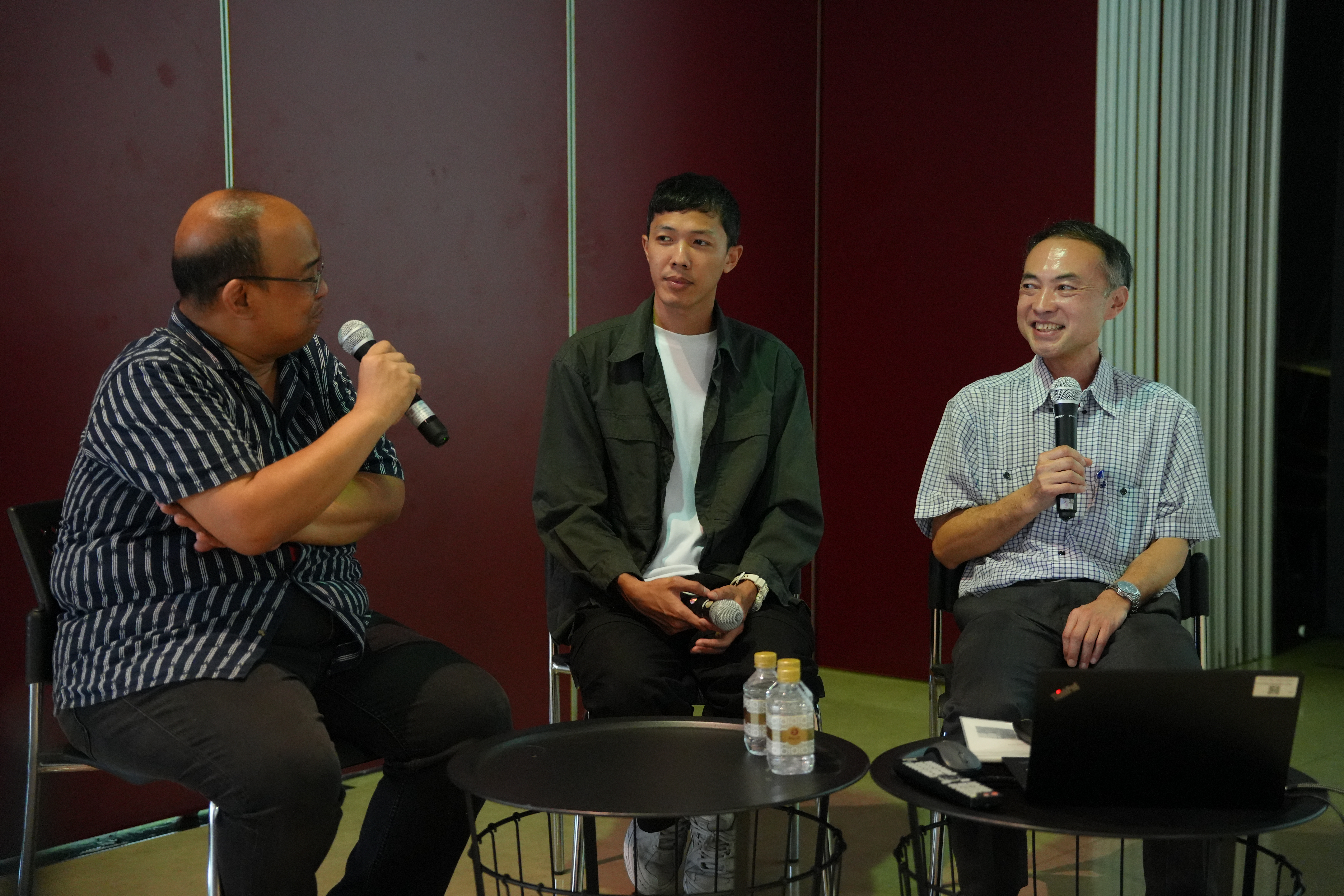
Speakers at the Forum “The Moving City”
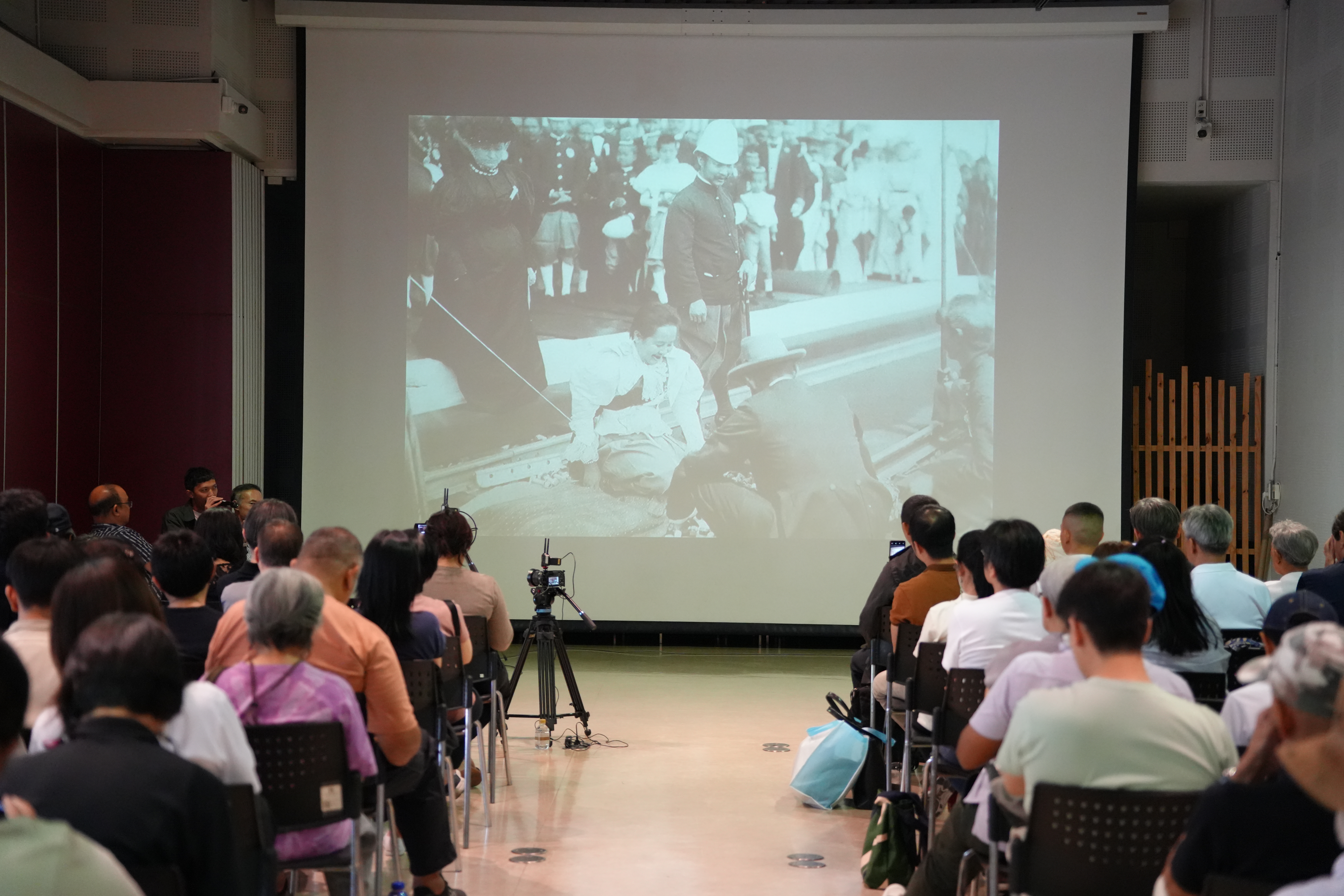
Royal Opening of the Bangkok–Ayutthaya Railway, 1896
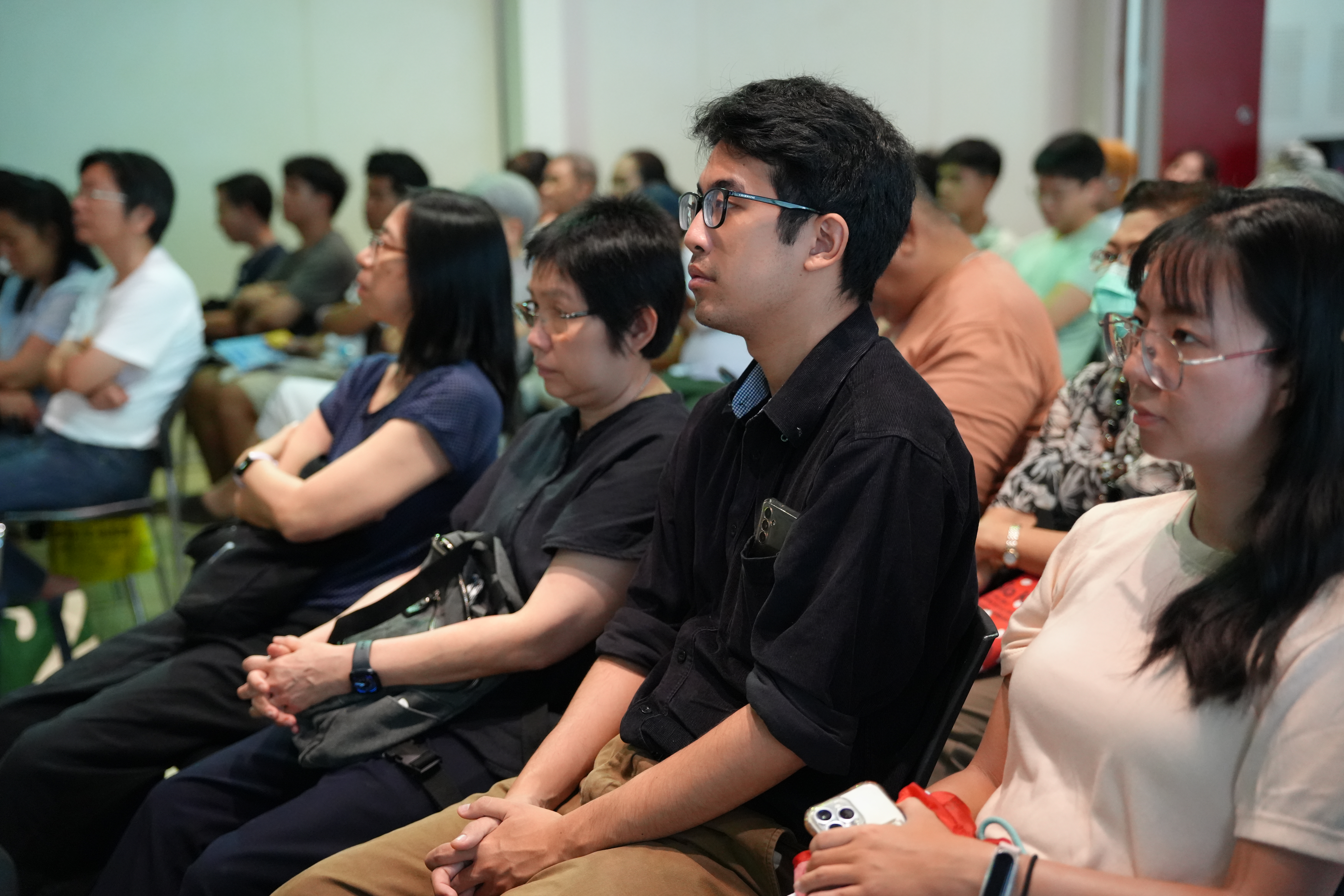
Audience at the “Moving City” Forum
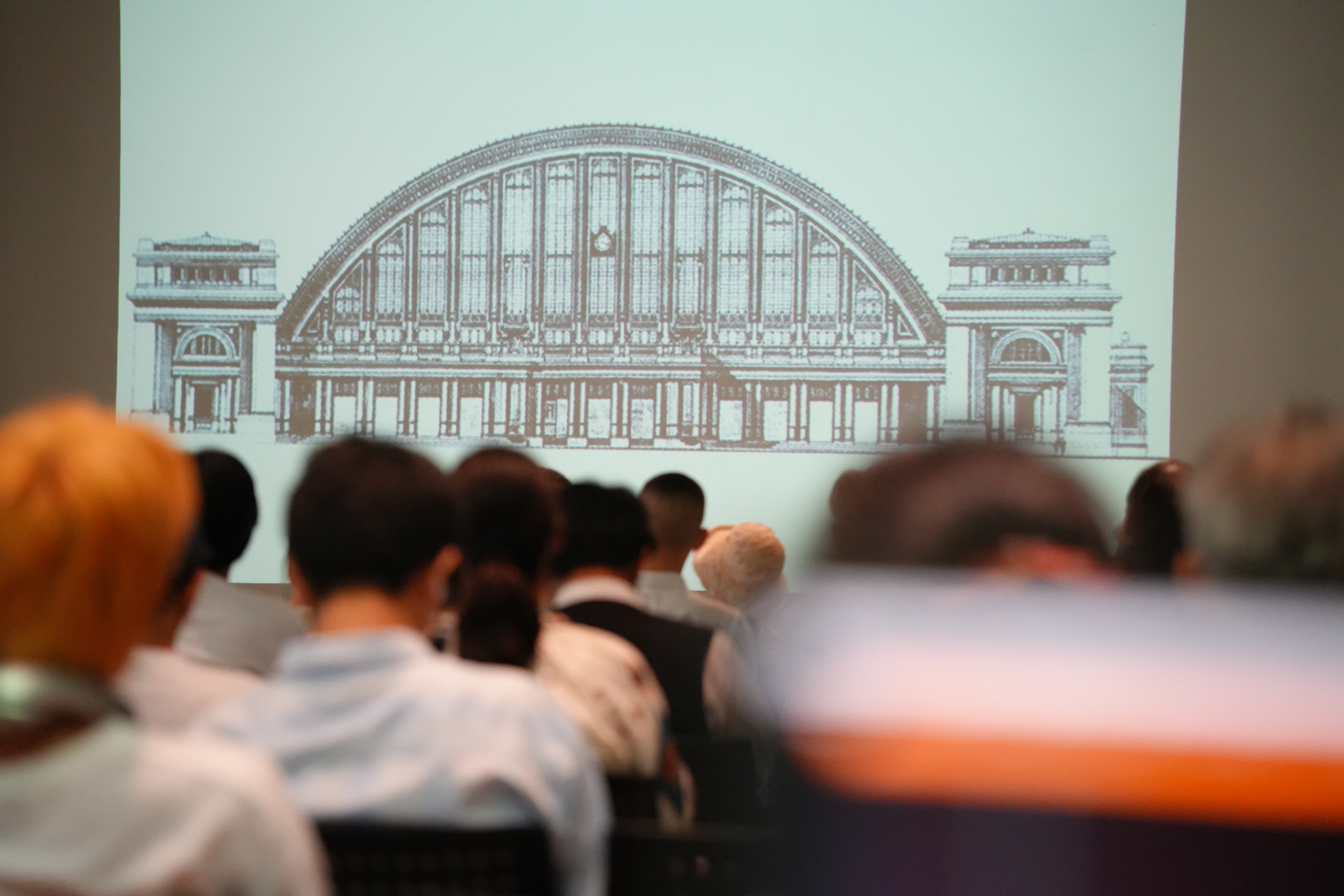
Original Design Drawing of Bangkok Railway Station by Mario Tamagno
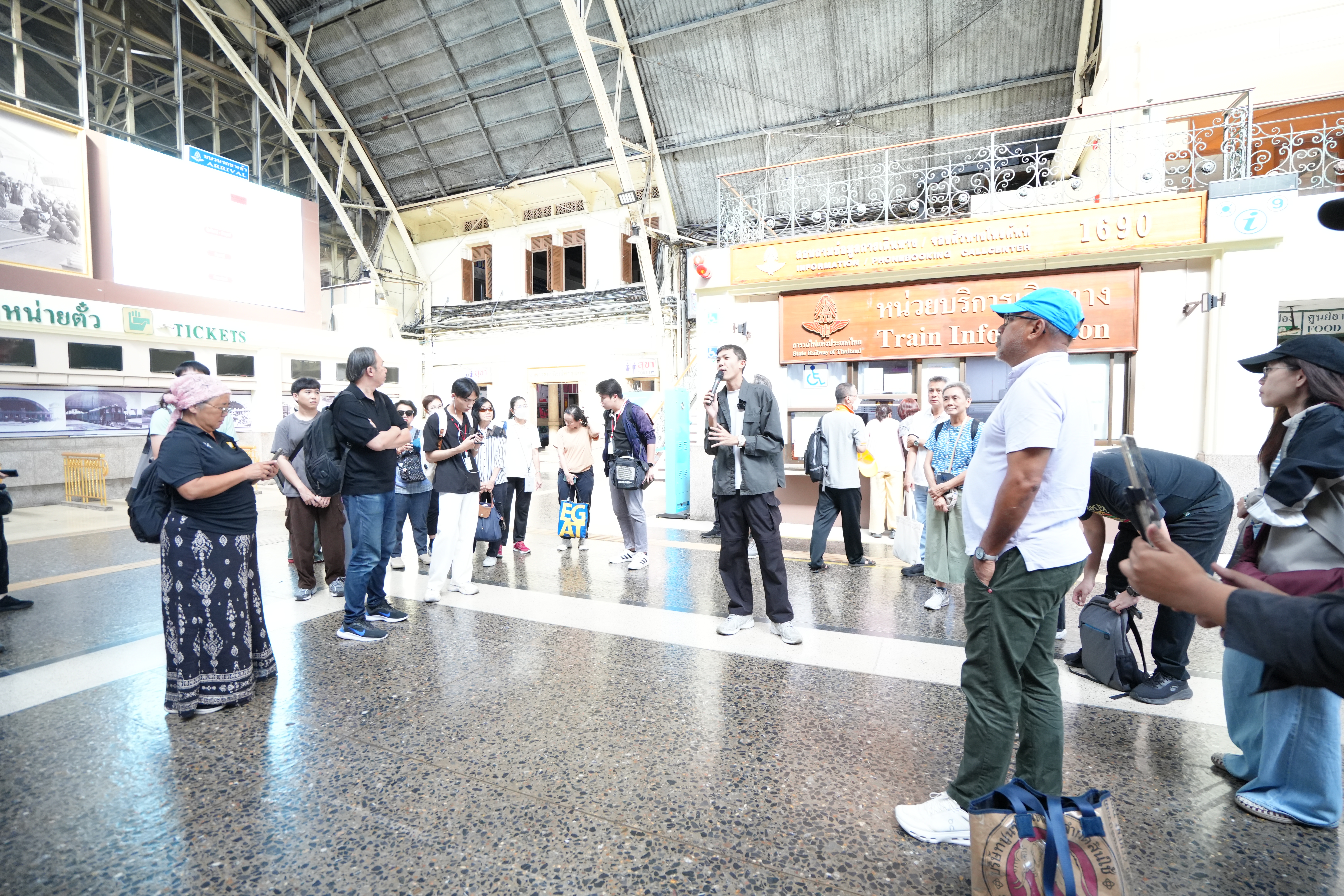
Main Hall of Bangkok Railway Station
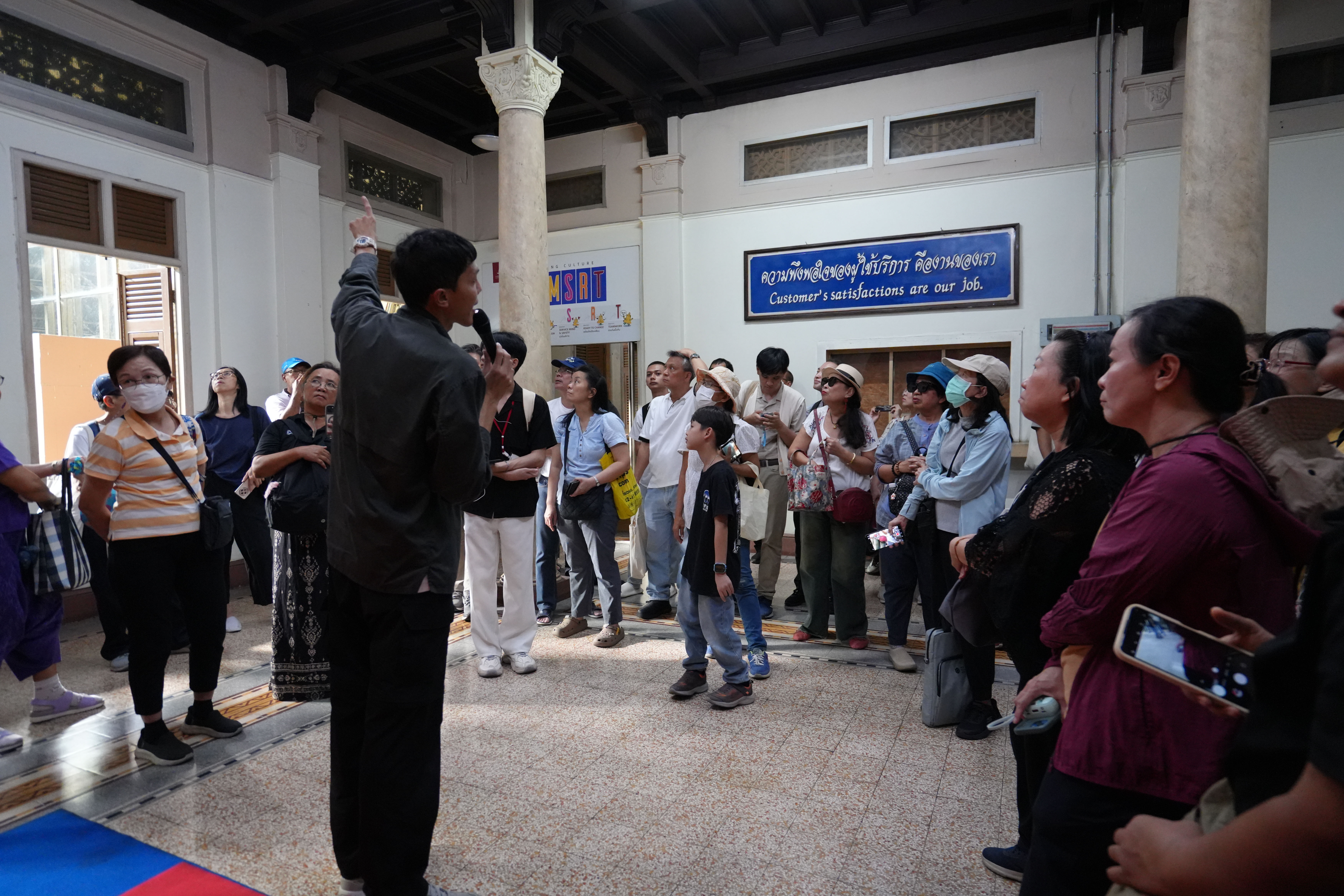
Former Ratchathani Hotel (Service Office Building)
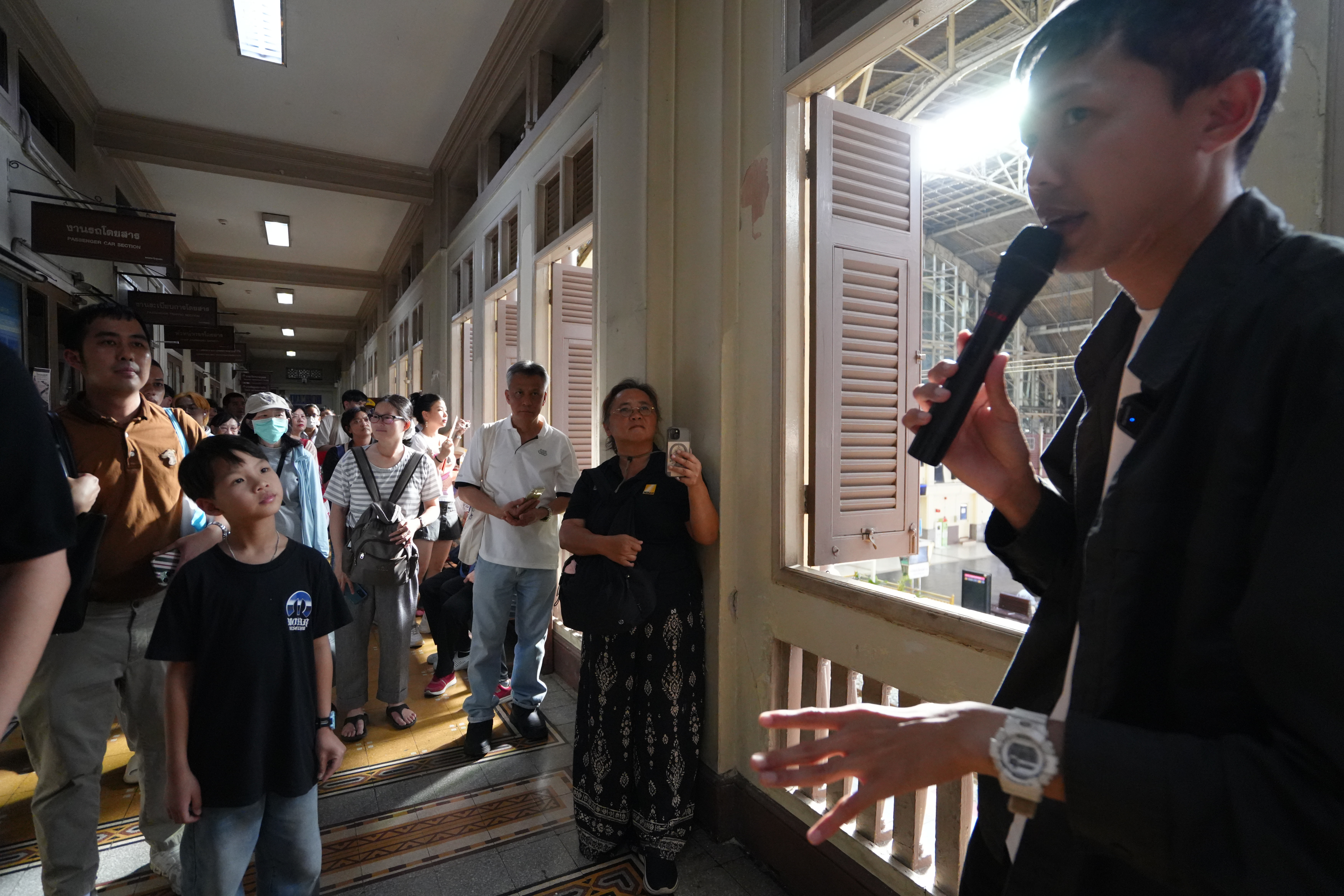
Second-Floor Balcony of the Former Ratchathani Hotel
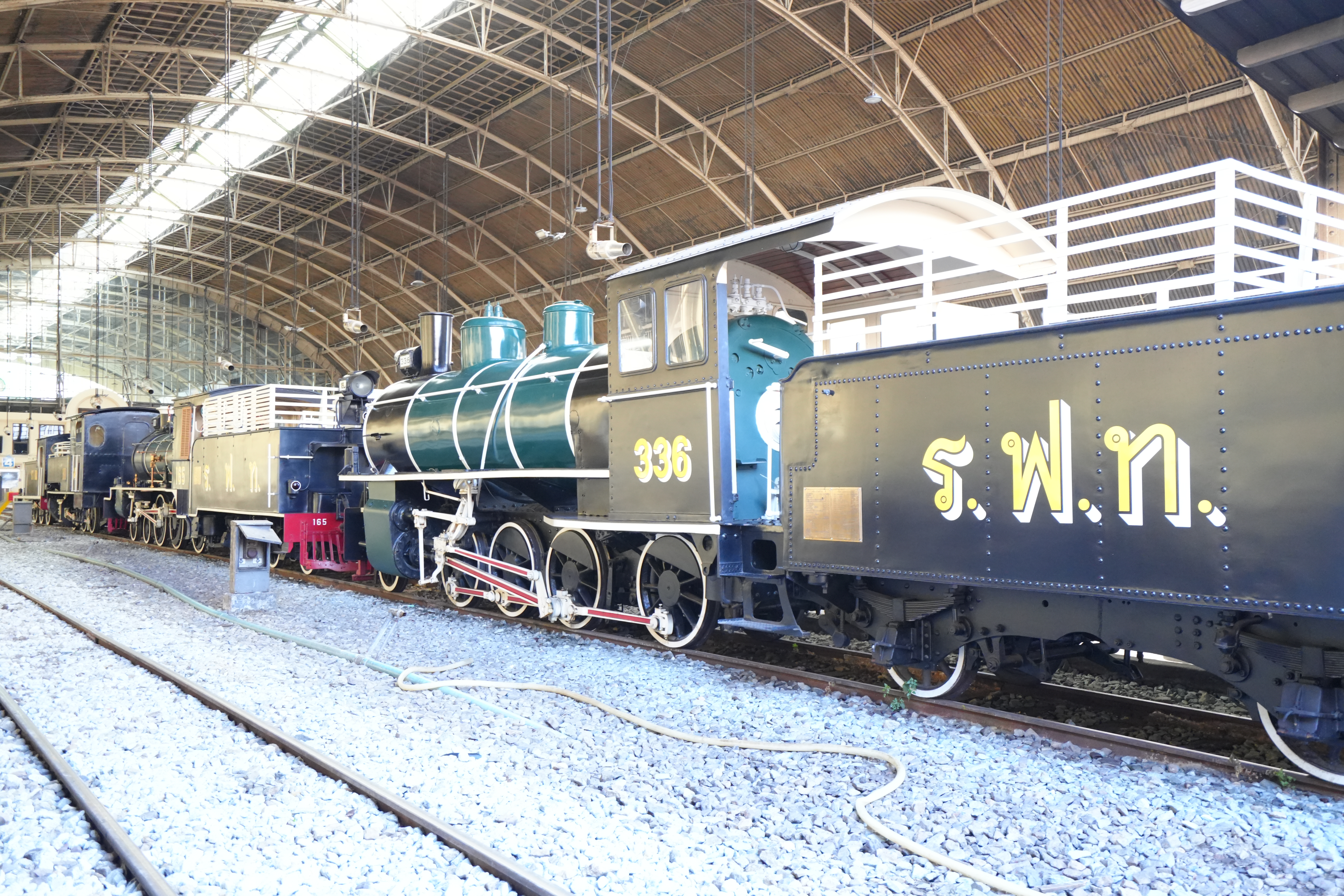
Historic Locomotives at Bangkok Railway Station
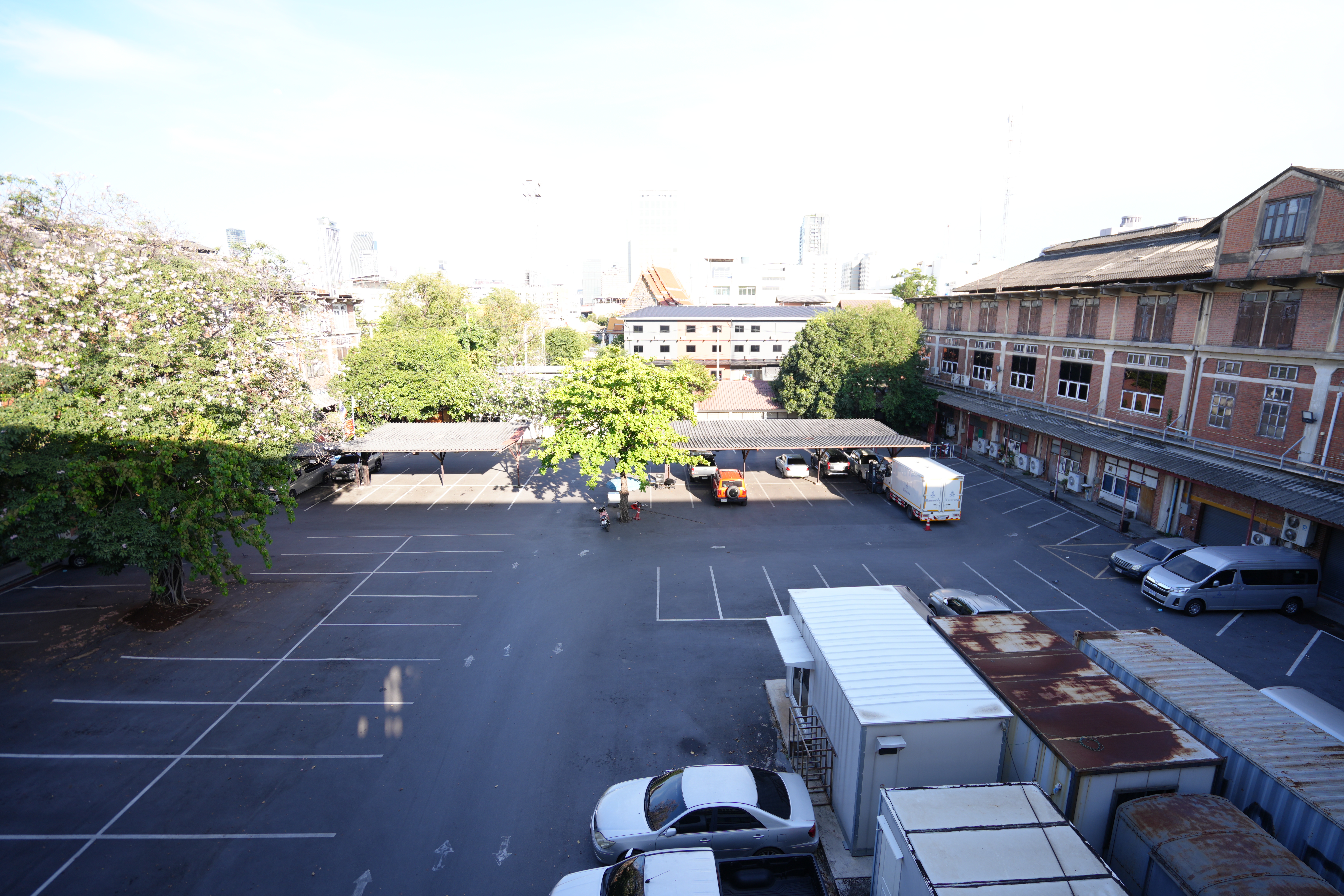
Parcel Building near Bangkok Railway Station
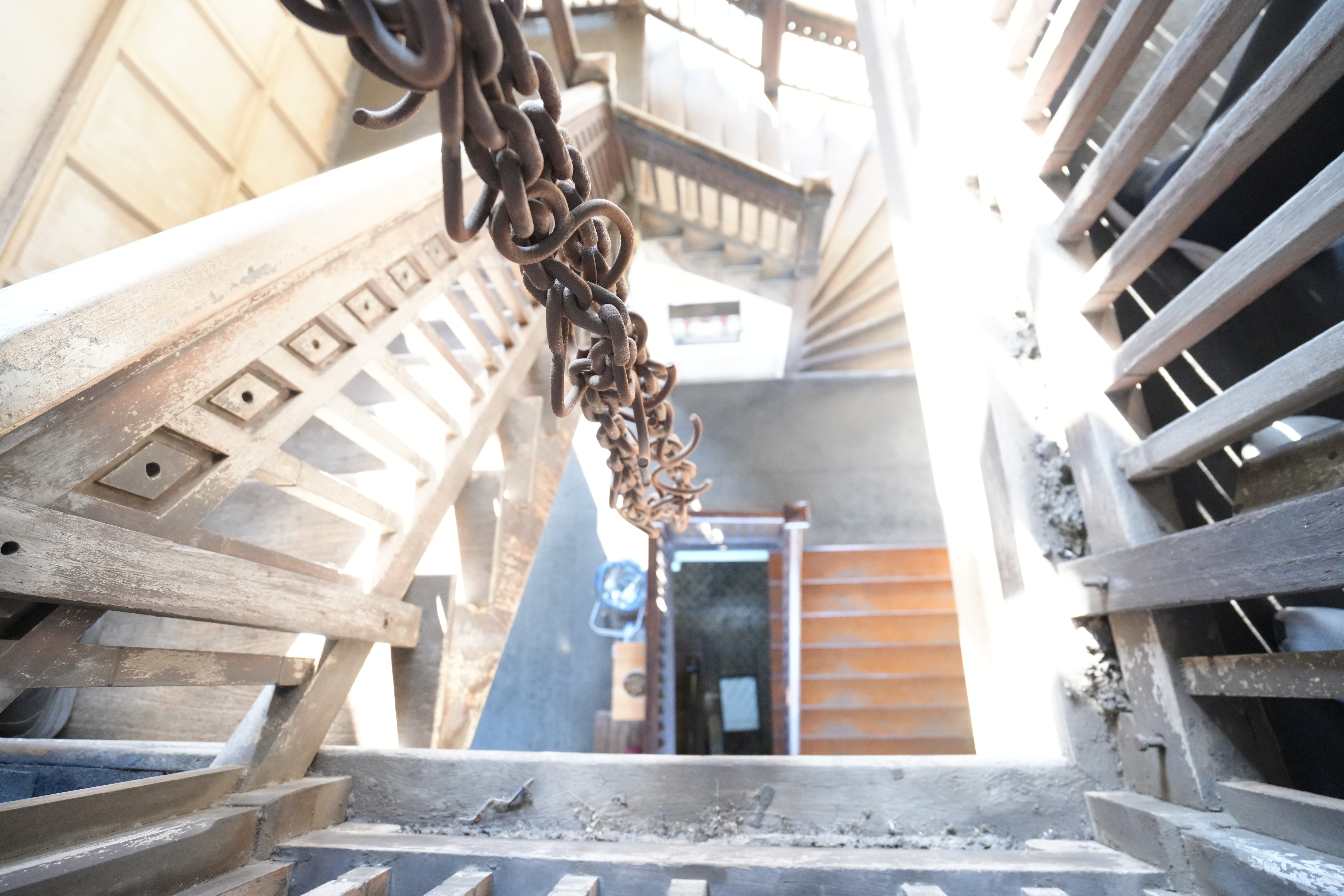
Pulley and Chain Mechanism inside the Parcel Building
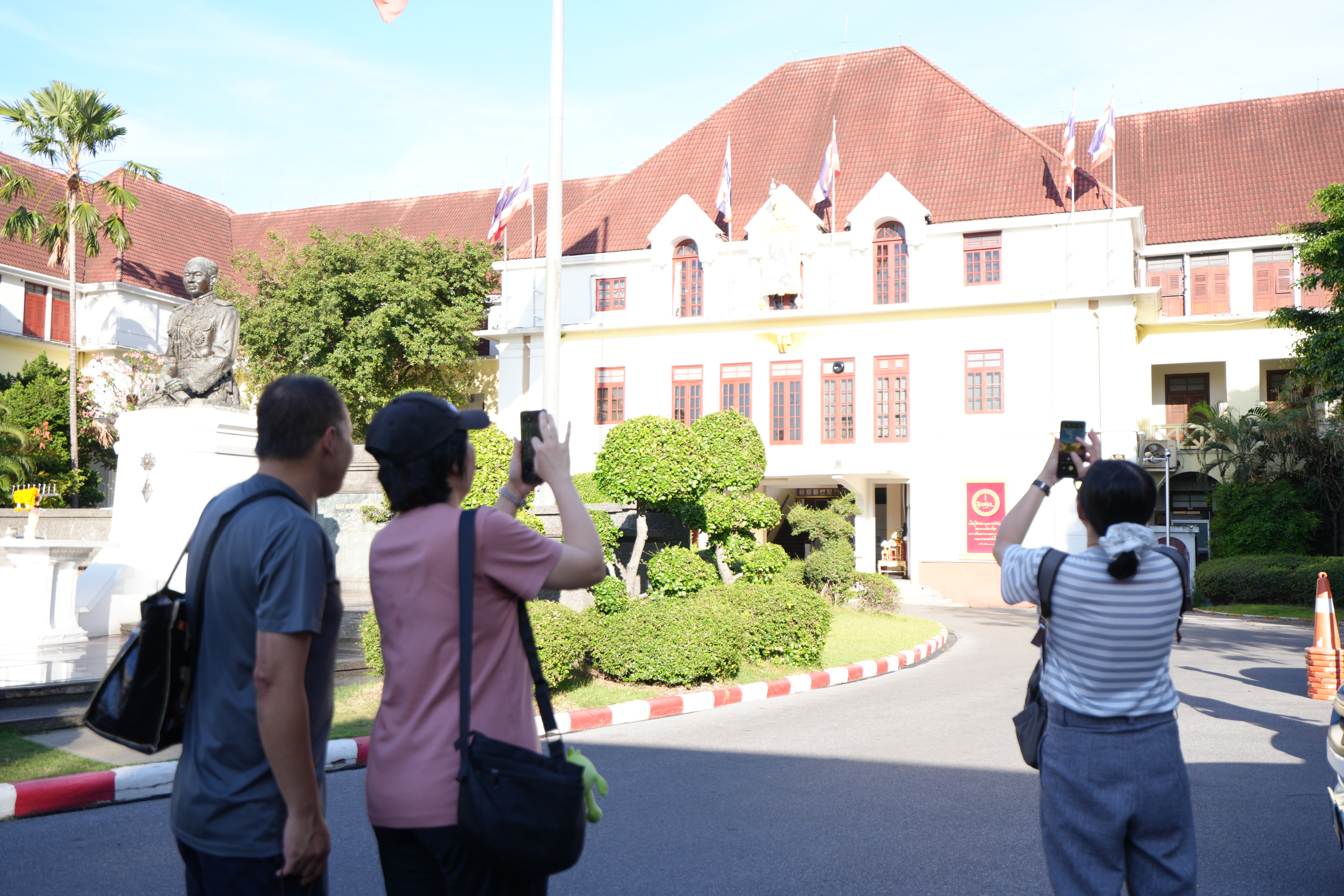
State Railway of Thailand Headquarters Complex
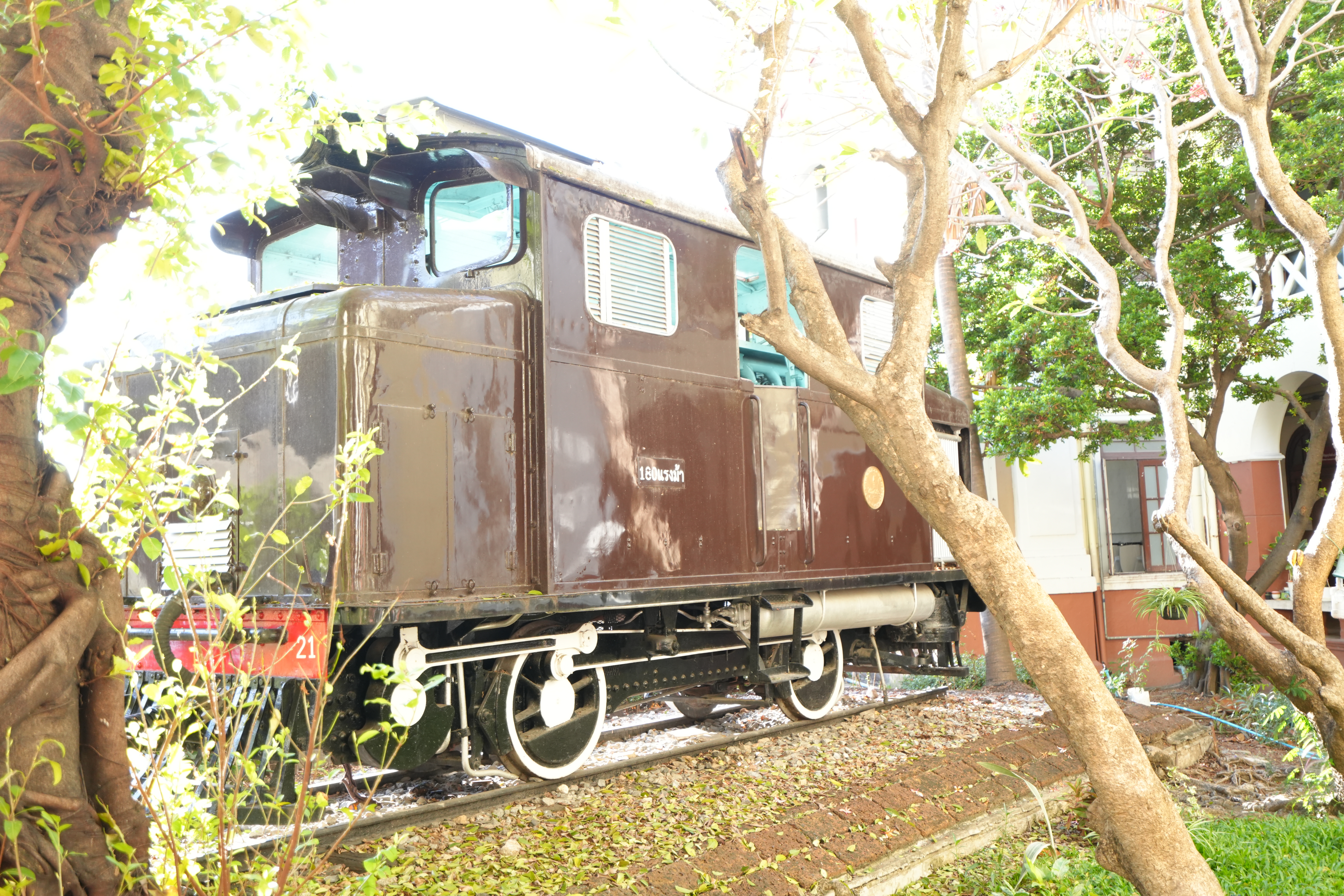
Siam’s First Diesel Locomotive
- National Discovery Museum Institute
4 Sanam Chai Rd., Phra Nakhon, Bangkok 1200 THAILAND
- Opening hours: at 10.00 a.m.- 6.00 p.m. Tuesday-Sunday (closed on Mondays)
- Tel. : 02 225 2777
- Fax. : 02 225 2775


